
Photo By: Josiah Ann Nelson
A federal judge’s Sept. 9 ruling ended a long-standing law on in-state tuition rates for qualified undocumented immigrants in Kansas.
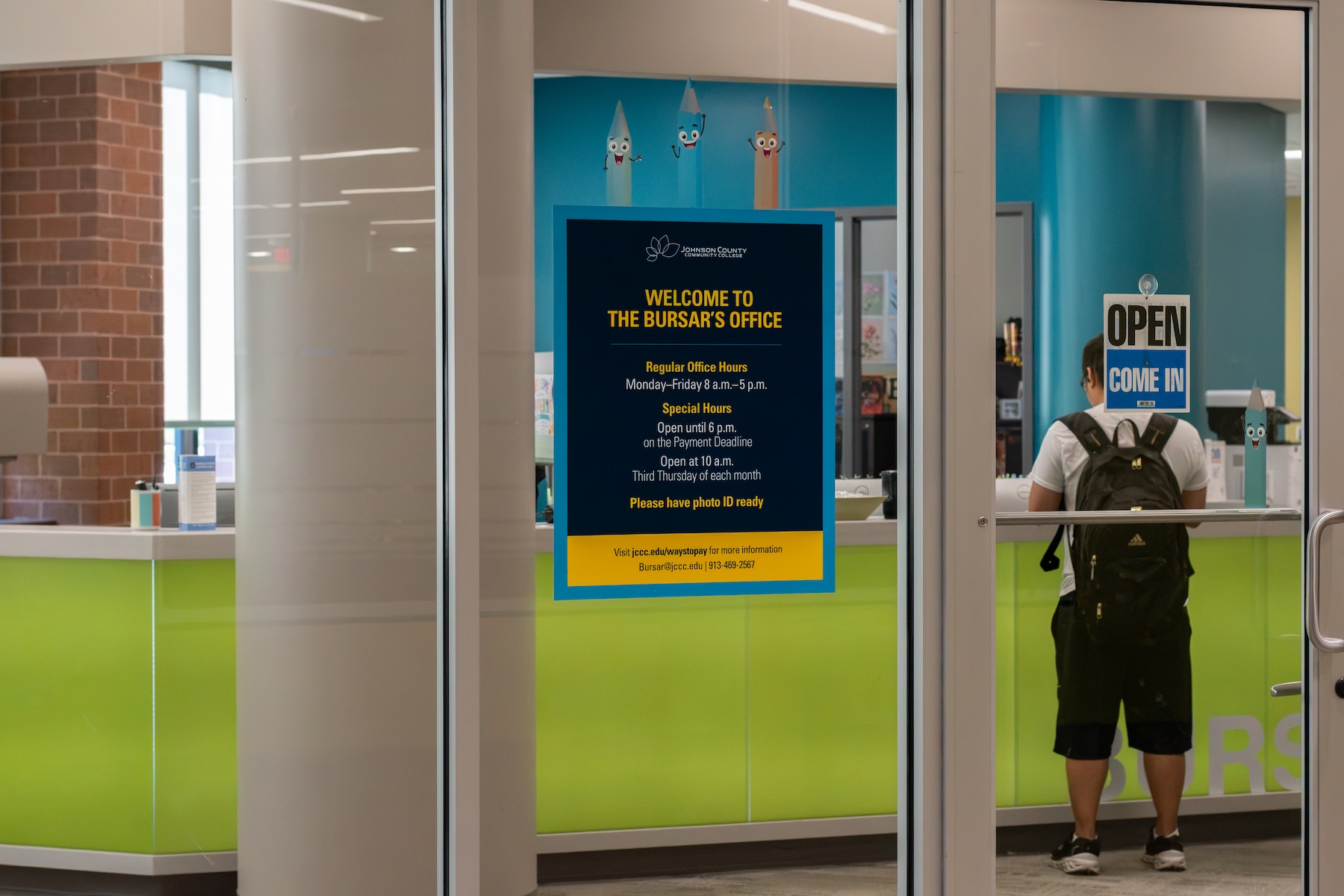
Effective immediately, undocumented JCCC students residing in Kansas must pay the out-of-state tuition rate of $250 per credit hour. This new ruling is expected to affect tuition affordability for many JCCC students.
The now-barred bipartisan law, established in 2004, allowed certain undocumented immigrants to attain in-state tuition by fulfilling a few requirements, including attending an accredited Kansas high school for at least three years, graduating or receiving a GED, and filing an affidavit stating that one is in the process of beginning or in the midst of receiving U.S. citizenship.
U.S. District Judge Holly Teeter struck down the law in Topeka in part because the U.S. Department of Justice filed a lawsuit against the state in June as part of the Trump Administration’s effort to end similar laws nationwide. Additionally, according to Teeter, the law conflicts with federal immigration law and is unfair to those living out of state who are U.S. citizens.
“The central problem here is that there are United States citizens and nationals who pay full nonresident tuition when an unlawfully present alien is eligible to pay a lower rate on the basis of residence,” Teeter wrote in her ruling.
International and Immigrant Student Services serves a total of 1,206 enrolled JCCC students navigating admissions and federal regulations. The blocking of in-state tuition rates for undocumented immigrants creates new and urgent questions about financial aid and next steps. Kim Steinmetz, director of IISS, and her team are working to ensure students receive up-to-date information and updates about the changes and how the college will implement them.
“We have been working closely with college leadership to ensure clear and timely communication regarding this ruling. We are providing written notice to affected students and connecting students with available resources,” wrote Steinmetz in an email. “JCCC values all members of our campus community and we are here to help.”
According to an undocumented student who must remain anonymous, Teeter’s ruling will significantly alter [their] plans to study [their] program of interest.
“I feel like it’s really going to affect the major I’m wanting to go into; not only is it expensive by itself, but it is going to be a lot more expensive now that I’m paying out-of-state tuition,” [Anonymous] said. “It really affects the opportunities that I have in my pathway to do what I want.”
[Anonymous] first heard about plans to end the 2004 law over the summer, when the federal government started suing Kansas, and says she was not surprised when the ruling occurred.
“I knew [the ruling] would go through just because [Kansas] is a heavily Republican state. I felt very upset and disappointed,” [Anonymous] said.
Although the IISS office reports that the extent of the impact of this ruling on future enrollment is not yet known, [Anonymous] believes many students will not be coming back due to limitations in accessibility and affordability.
“Most people came here because they saw the opportunity they had with the in-state tuition law. But now that that’s gone, that limits the amount of people who can pay for that,” Anonymous] said.
[They] note that many people affected by the ruling have been in the state since they were young or for a long time; the American education system is the only one they know.
[Anonymous] hopes this ruling will be addressed in the upcoming general election as well as deliberated for its validity by voters.
“There could be [an overturning] depending on how the midterms go and how many people are for immigrant rights and rights of immigrant students. I do hope to see overturning, but I feel like with what’s going on right now, in the state that we are in, that may take a bit of time,” [Anonymous] said.
In response to Teeter’s ruling, local community group Kansas Missouri Dream Alliance
(KSMODA) continues its advocacy for immigrant rights and education by tracking resources to support undocumented students’ education.
KSMODA was founded in 2009 by undocumented graduates of high schools across Kansas City. The group is an affiliate of United We Dream, the largest immigrant youth-led network organization in the United States.
“Our advocacy started from the recognition that we are also part of the great state of Kansas or Missouri, and that our dreams of continuing our education are achievable and valuable to ourselves and our community,” Volunteer executive director of KSMODA and former JCCC student Nubia wrote in an email.
Nubia says this ruling is a barrier to how immigrant students receive, continue, and pay for their education.
“This [ruling] will be hard for immigrant Kansas youth because they will either have to take fewer credit hours, take longer to complete their degrees, have multiple jobs, or find other ways to pay for their tuition,” Nubia wrote.“This is a miss for Kansas schools because they are losing out on the richness of our Kansas students and what they bring to their schools: the culture, the language, the different perspectives, the skills, and other valuable contributions,”
She calls on post secondary schools around the state that benefit from these contributions to make known their missions to welcome all.
Nubia says KSMODA will continue to support organizations fighting for immigrant protections as well as inform those affected by the ruling with updates about resources.
“We will continue to support KS ACLU [American Civil Liberties Union] and MALDEF [Mexican American Legal Defense and Educational Fund] in documenting and cooperating with their legal battle,” Nubia wrote. “We are currently in the planning stages of how we can look for resources, make our own resources, and help those to continue furthering their education.”
For more information about the Sept. 9 ruling’s effect on tuition rates for undocumented immigrants, contact JCCC’s International and Immigrant Student Services.





Leave a Reply