
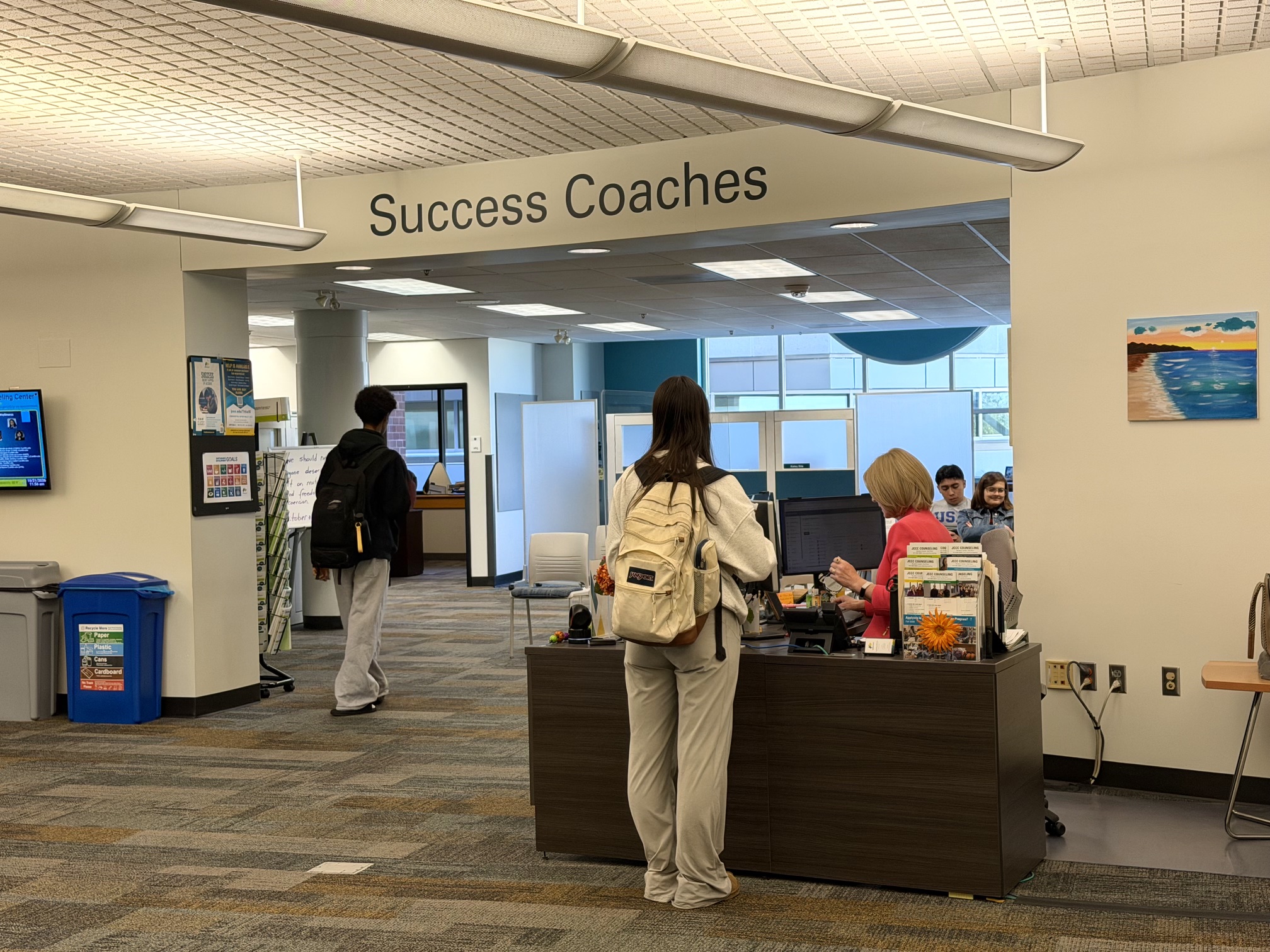
Photo By: Josiah Ann Nelson
Johnson County Community College has a resource for just about everything, but finding the right ones isn’t always straightforward. I found mine through conversations with professors and, once I joined the Honors Program, with its advisers as I figured out what I wanted from my college experience.
These are the three I keep coming back to and the ones I’d point any student toward first.
Let’s clear something up first: the Honors Program is not a secret club for students with perfect transcripts.
It does have requirements, but they may be more within reach than you think. Students who make the Dean’s list or President’s list are automatically invited to join.
When you apply, only the GPA you’ve earned here is considered, not your cumulative GPA, so a rough semester at another school won’t hold you back. Once you’re in, you’re expected to maintain a 3.5 GPA to stay in the program. Not sure it’s for you? The program suggests taking a single Honors course to see if it’s a good fit.
What you get out of it is more than a fancy line on your transcript. Members get their own honors advising and a faculty mentor, plus extra preparation for transferring to a four-year school. It also quietly saves you money. Honors students in good standing get an automatic scholarship that typically covers three credit hours of honors coursework each semester. If you’ve ever wanted to spend a week living and learning in a national park, honors students are eligible for exactly that through Partners in the Parks.
For me, the most valuable part of Honors has been Regan Baker in the Honors office. Staying in good standing isn’t as simple as it looks on paper. Beyond keeping your GPA up, you’re also tracking honors points and making sure you complete your exploratory experiences, and it’s easy to lose track of where you stand. Regan has helped me sort through all of it and make sure I’m on pace, which has taken a lot of the guesswork out of the program.
Stop by GEB 140 or set up a time with staff at [email protected].
Financial Aid and Scholarships
Here’s the tip I’d give every student: fill out the JCCC Scholarship Application. One application puts you in the running for hundreds of scholarships offered to students here. Most are worth somewhere between $100 and $2,000 a year, and a few of those stacked together can make a real dent in a semester.
Put two dates in your phone right now. March 15 is the priority deadline for the FAFSA, and April 1 is the priority deadline for the scholarship application. You have to do both every year, which is exactly the kind of thing that’s easy to forget. The FAFSA isn’t technically required for scholarships, but filing it gets you considered for need-based and many department scholarships, so skipping it means leaving money on the table.
If the FAFSA makes your eyes glaze over, that’s what the Financial Aid team is for. They offer free in-person help, and you can book an appointment at 913-469-3840. They also meet over Zoom, and the office is in the Student Success Center.
When I first enrolled, someone from the department reached out by email and encouraged me to apply for scholarships. As a homeschooled student, I hadn’t expected my placement test results to open any doors, but they thought I might qualify for a few. I applied, and after I was later accepted into the Honors Program, I received an honors scholarship as well. It was a good reminder that it’s worth applying even when you’re not sure you’ll qualify.
The biggest misconception about career services is that they’re for people walking across the stage next week.
They’re not.
You can start using the center as soon as you enroll, and your student ID number is all you need to access its resources.
Need someone to tell you your resume is three pages too long? A Career Coach will review it, along with your cover letter. You can practice your interview skills before the real thing or show up to a First Impression Dinner. The Emerging Professionals Program is another way to build your networking skills. And if you still have no idea what you want to do, that’s fine too. The center can help you figure it out through informational interviews and job shadowing, along with volunteer opportunities.
I started using the center after it was recommended to me, and I ended up leaning on it a lot. Once I decided an internship would count toward my Honors requirements and give me hands-on experience in my degree field, I went in for help exploring employment options and getting my resume in shape.
Find them in SC 252 or call 913-469-3870. They’re open 8 a.m. to 6 p.m. Monday through Wednesday, 10 a.m. to 6 p.m. Thursday and 8 a.m. to 5 p.m. Friday.
Where to start
College is a lot easier when you know where to go for help, but I didn’t find any of these on my own. Someone pointed me toward each one at the right time, sometimes a professor and sometimes an adviser or an email from the department.
Consider this your version of that conversation. They’re all here, and they’re all free to use. The hardest part is just getting started.











Leave a Reply