
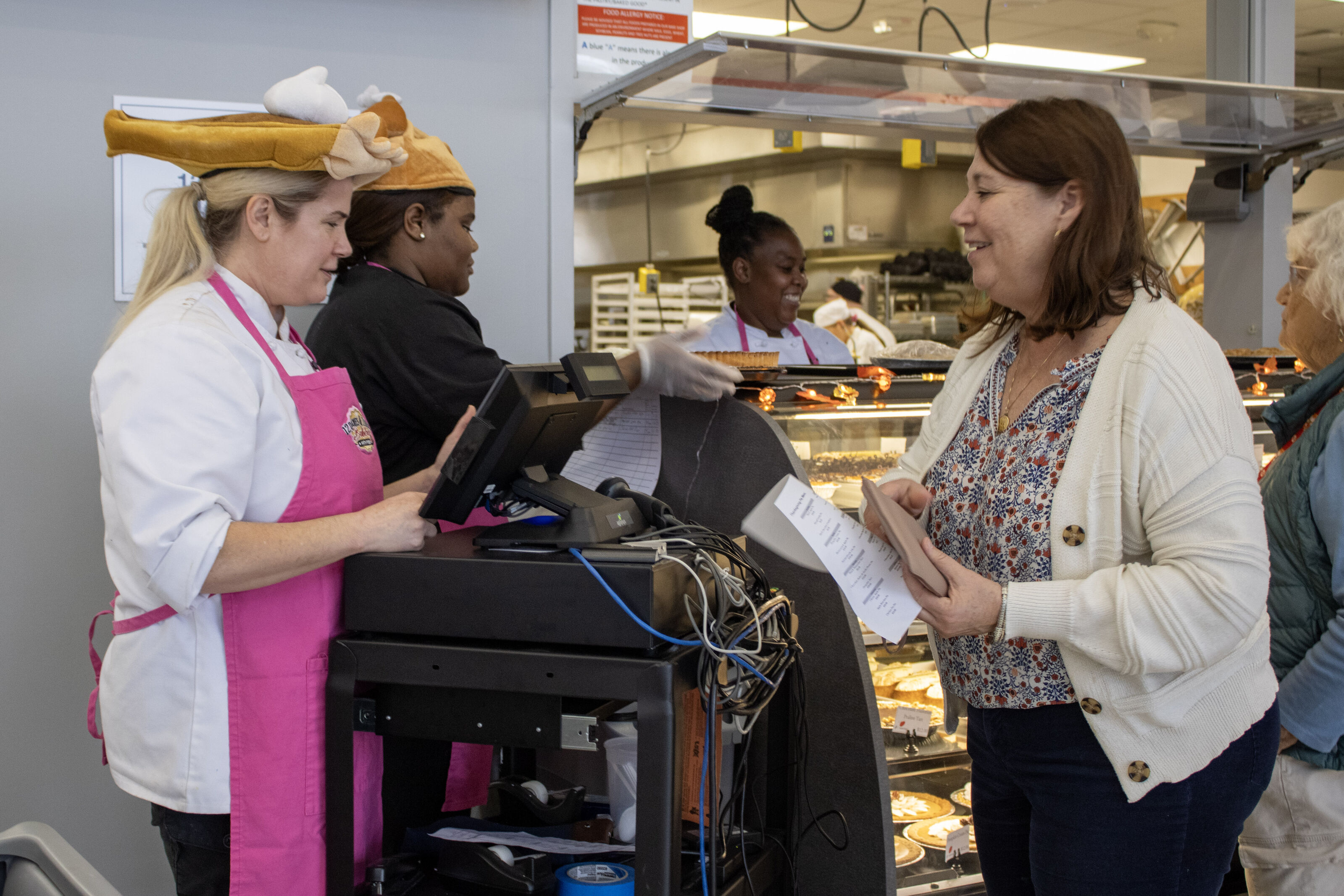
(Photo by: Miranda Sue Philpot)
The art of pastries, savory dishes and management are all taught in the same, delicious-smelling building. The WHCA (Wylie Hospitality and Culinary Academy) building on campus is the home of multiple programs like the Chef Apprenticeship, Hotel and Lodging Management, Food and Beverage Management, and Pastry/Baking, and no, it’s not like Gordon Ramsey’s “Hell’s Kitchen”.
“No, that’s not real life. You’re going to work, you know, you may have those situations sometimes where you work for someone that might be like that,” Alison Reed, an associate professor in hospitality management said. “I mean, some people might thrive in a situation like that, but really, that’s all for show. It’s not really like that, but it’s very intense, fast-paced, and sometimes there’s pressure. But if you’re not busy at a job like that, you’re going to get bored.”
Three of the programs, excluding the Pastry/Baking program, will give you an associate’s degree in applied science.
The Chef Apprenticeship program is a 75-credit-hour program that is completed in two to three years. It requires about four gen eds, and students are required to have a full-time job in a kitchen during the program.
“You don’t really have time for anything besides school and work for three years. It’s a lot of hard work,” Hailey Kahler, a current student in the apprenticeship program, said. “I think it’s really cool to look back and see how far you’ve grown.”
After graduating from the Chef Apprenticeship program, students will leave with an associate’s degree and a sous chef certification from the American Culinary Federation.
One way students may be familiar with the WHCA building is through the weekly bake sale that is hosted by the Pastry/Baking program. The bake sale is hosted every Thursday during the semester.
“Not at the beginning or end of the semester, because they’re preparing everything,” Reed said.
The possibilities within the WHCA building are endless–you don’t have to be interested in pursuing a career in a kitchen to enroll in one of the four programs.
“I want students to know that there are many more options available in the industry than just being a chef or cook. A lot of people can’t handle those hours, maybe, or physically don’t want to stand on their feet for that long… But [with] the amount of other options that are available now, you don’t have to work in a kitchen. You can be a food writer, a food stylist, work on a cruise ship, work at a country club, work at a casino, a resort, be a general manager, be a housekeeping supervisor, be a travel agent,” Reed said.
Students who aren’t interested in pursuing a degree within the programs offered can still take classes within the program, such as Professional Cooking 1 and Fundamentals of Baking. All students are required to take the Food Service Sanitation class as well, which is the prerequisite or co-requisite for every culinary class. These classes are 16 weeks long, and each lab class is three and a half hours.
“It gets easier as you learn more and your skills build upon each other in every class, and your skills from work will help you out,” Kahler said.
To learn more about the program, associate professor Reed asks that students set up a meeting and speak to a professor.







Leave a Reply