
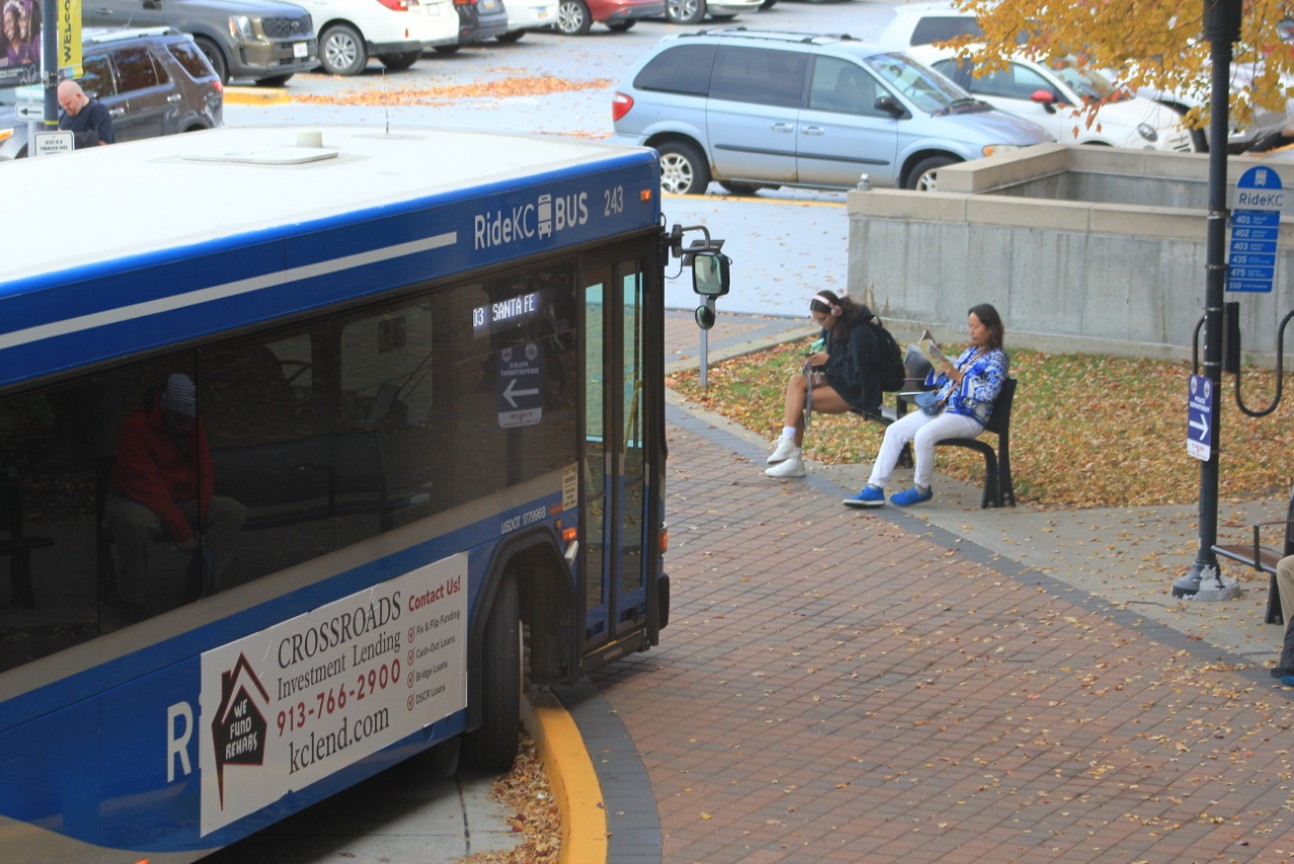
(Photo by: Jasmine Mills)
“Nuts,” is how JCCC student Emma Weis described her feelings about bus fares returning. After six years of free public transportation, Kansas City’s nearly 12 million bus riders will have to start paying $2 a ride starting in June, according to Kansas City News and NPR.
Weis, who uses the buses to get to and from school two days a week, will have to make adjustments next semester to accommodate the new fares.
“It certainly is another reason I should buy another car. I’ve been putting it off because of the cost, but with fares of $2, that’s a total of $128 over a semester. Manageable, but not small,” Weis said.
She explained that the fares may start to affect people’s ability to make it to class. Maybe they need to buy groceries, maybe they have a bill they need to pay, or maybe they are simply waiting for a paycheck to cash out, and they just don’t have the extra money to pay for the bus.
“Students tend to be younger and poorer than the average person,” Weis said. “Therefore, they are much more likely to rely on public transit. It will most certainly hurt students more than the average person. Many people have very tight budgets, especially students.”
Weis believes some compromises could help make the fares more affordable for students who may not have that extra money.
“[Maybe a] student discount either through the city or JCCC. Maybe the college could negotiate some deal for JCCC students,” Weis said. “We have a lot of students, and that’s a lot of business for the buses.”
Coordinator of the Student Basic Needs Center, Robbie Miller, explains that having public transportation options is important because it ensures that people who don’t have a personal vehicle can make it to school or work.
“Having to pay a bus fare might affect some students financially in terms of having another expense. It could possibly place more financial pressure on them, which might affect their school attendance and budgets,” Miller said.
However, he believes that it may also present an opportunity for some students to begin learning how to budget their expenses.
“A bus fare may be viewed as a small expense to some people, but no matter the size of the expense, it can drastically affect a person’s finances,” Miller said.
Executive Director of the Center for Sustainability, Jay Antle, explained that public transportation can impact sustainability.
“Simply put, the more people who ride buses as opposed to driving themselves, the less fuel we use and the less air pollution we have in the air. Add to that, stress reduction from not having to drive, plus less wear and tear on individual vehicles, and public transportation’s contributions to sustainability are clear,” Antle said.
That being said, he claims that for it to have any real effect, people have to be using what is offered to them.
“Typically, you need 5-10 people on a bus for the environmental benefits to pencil out, to say nothing of how that bus is paid for,” Antle said.
Antle explains that from the community perspective, there is a sustainability argument when it comes to keeping public transportation affordable.
“Providing access to transportation is an equity issue in addition to reduced pollution/traffic congestion goals,” Antle said. “For JCCC, the college has a goal to reduce single-person commuting to the campus by 10% by 2035. JCCC can’t provide these mass transit services ourselves, so we rely on our county and regional transit partners for that.”










Leave a Reply