
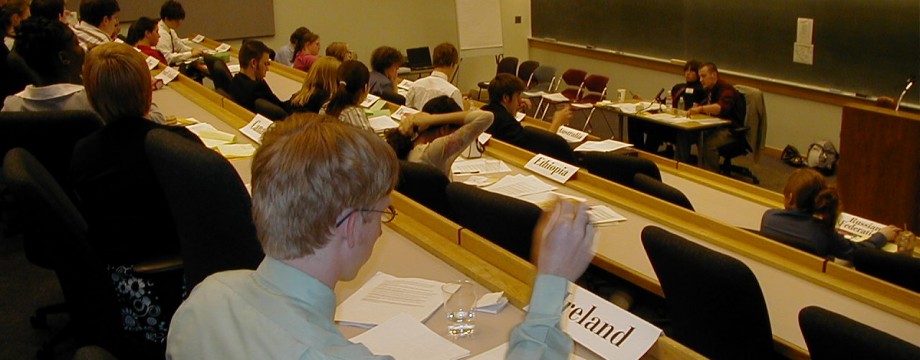
United Nations Environment Assembly
Committee Mandate
The United Nations Environment Assembly (UNEA) is the world’s highest-level decision-making body on environmental matters and was established in 2012 through the outcome document of the United Nations Conference on Sustainable Development (Rio+20), The Future We Want. 1 UNEA succeeded the Governing Council of the United Nations Environment Programme (UNEP) with universal membership of all UN Member States and meets every two years.2 The creation of UNEA allows UNEP to serve as the primary body coordinating responses to environmental issues while UNEA sets the global environmental agenda, provides overarching policy guidance, and contributes to the development of international environmental law, making it the primary intergovernmental forum for environmental governance. 3 ; 4 The work done by UNEA encompasses a wide range of issues, including climate change, biodiversity loss, pollution, sustainable consumption and production, and the management of natural resources.5 Its resolutions and ministerial declarations, while not legally binding, hold significant political weight and have been instrumental in shaping multilateral environmental agreements, influencing domestic legislation, and strengthening coherence across the UN system in relation to the environmental dimensions of sustainable development.6 UNEA also serves as a unique platform for multi-stakeholder engagement, bringing together governments, intergovernmental organizations, civil society, the private sector, and academia.7 Through this inclusiveness, UNEA fosters dialogue and consensus, supporting the implementation of the 2030 Agenda for Sustainable Development and the Paris Agreement on Climate Change. By doing so, it reinforces the central role of environmental sustainability as a prerequisite for achieving broader UN goals on peace, prosperity, and human well-being.8
Membership
UNEA has universal membership, with all 193 UN Member States entitled to participate on an equal footing, each holding one vote. This universal membership ensures that UNEA reflects the collective voice of the international community in environmental governance. Membership also extends beyond states to include significant participation by Major Groups and other stakeholders, a framework established at the 1992 Rio Earth Summit.9 This mechanism allows civil society organizations, business and industry groups, scientific communities, and youth representatives to actively contribute to UNEA debates, reflecting the Assembly’s commitment to inclusive and participatory decision-making.10
Reporting UNEA meets biennially in Nairobi, Kenya, the headquarters of UNEP, and reports directly to the UN General Assembly through the Economic and Social Council (ECOSOC) on environmental matters. UNEA’s resolutions, decisions, and declarations set the framework for UNEP’s programmatic work and inform coordination across the wider UN system.11 The UNEA works through plenary debates, high-level segments, and thematic discussions, producing draft resolutions that are refined in working groups and ultimately adopted by consensus or majority vote influencing and setting the global environmental agenda well beyond the UN system, informing multilateral negotiations, global summits, and national policymaking.12 In this way, UNEA functions as a bridge between environmental science, policymaking, and international cooperation, ensuring that global action on the environment remains coherent and coordinated while UNEP serves as the facilitatory body, ensuring the implementation of UNEA’s outcomes and supporting follow-up processes across Member States and regional organizations.13 ; 14
Endnotes:
1 Rio+20. “The Future We Want”.
2 Ibid.
3 UNEP. “About Us”.
4 Rio+20. “The Future We Want”.
5 UNEP. “About the United Nations Environment Assembly.”
6 Ibid.
7 Ibid.
8 Ibid.
9 United Nations. “Report of the United Nations Conference on Environment and Development”. 1992.
10 Ibid.
11 UNEP. “About the United Nations Environment Assembly.”
12 Ibid.
13 Ibid.
14 UNEP. “About Us”
Topic A: SDG 6 and the Right to Water for All
Introduction
Water is essential for human survival, health, dignity, and development, and has been recognized by the United Nations as a fundamental human right.1 In 2010, the UN General Assembly explicitly recognized “the right to safe and clean drinking water and sanitation as a human right that is essential for the full enjoyment of life and all human rights”.2 Despite this recognition, more than 2 billion people globally still lack access to safely managed drinking water, and around 3.6 billion lack safely managed sanitation services, placing immense strain on health systems, livelihoods, and economic development.3 The importance of water access is embedded within the 2030 Agenda for Sustainable Development, particularly Sustainable Development Goal (SDG) 6, which aims to “ensure availability and sustainable management of water and sanitation for all”.4 Water is also a cross-cutting resource that underpins many other SDGs, including those related to poverty eradication (SDG 1), health (SDG 3), gender equality (SDG 5), sustainable cities (SDG 11), climate action (SDG 13), and peace, justice, and strong institutions (SDG 16).5 Ensuring universal access to water is therefore both a standalone goal and an enabler of broader sustainable development.6 However, achieving the Right to Water for All faces serious challenges as climate change increases water scarcity, with droughts and extreme weather events threatening both water quantity and quality. Rapid urbanization, pollution, unsustainable agriculture, and industrial demand are further straining already limited resources. Meanwhile, vulnerable populations such as women, children, Indigenous peoples, and those in conflict zones are disproportionately affected by water insecurity, highlighting the issue as both a development challenge and a matter of social justice.7
Background
The recognition of water as a human right has been shaped by decades of advocacy, evolving international law, and growing global awareness of water scarcity. 8 The foundations were laid in 1977 at the UN Water Conference in Mar del Plata, where Member States first acknowledged access to drinking water as a basic right of all people, declaring that “all peoples, whatever their stage of development and their social and economic conditions, have the right to have access to drinking water in quantities and of a quality equal to their basic needs”.9 This marked one of the earliest international commitments linking water to fundamental rights and development.
Over the following decades, water was integrated into broader frameworks on development and human rights. The Convention on the Elimination of All Forms of Discrimination Against Women and the Convention on the Rights of the Child both recognized the importance of safe water access in fulfilling women’s and children’s rights.10 11 These treaties helped place water access within the human rights system, framing it as essential for health, equality, and dignity. 12 Momentum accelerated in the early 2000s with the work of the UN Committee on Economic, Social and Cultural Rights, which explicitly recognized “the human right to water” as inherently tied to the right to an adequate standard of living and the right to health.13
This recognition created a binding framework for those Member States party to the International Covenant on Economic, Social and Cultural Rights, mandating Member States meet obligations to ensure sufficient, safe, acceptable, accessible, and affordable water for all. Then in 2010, the UN General Assembly (GA) adopted Resolution 64/292, officially recognizing “the right to safe and clean drinking water and sanitation as a human right that is essential for the full enjoyment of life and all human rights”.14 Later that same year, the Human Rights Council affirmed the resolution and clarified that both rights to water and sanitation are part of existing international law and legally binding for Member States which transformed water from a development aspiration into a universal entitlement, requiring concrete action by Member States.15 Since 2010, the UN has institutionalized water rights within its broader development agenda. The creation of the “Special Rapporteur on the rights to water and sanitation” has provided ongoing monitoring, reporting, and guidance to Member States on specific and broad topics through the UN Human Rights Office of the High Commissioner. 16 Moreover, the adoption of the 2030 Agenda for Sustainable Development embedded SDG 6 as the global benchmark for ensuring universal access to safe and affordable drinking water, sanitation, and hygiene by 2030.17 Together, these initiatives reflect the UN’s growing recognition that realizing the right to water is indispensable in achieving human rights, sustainable development, and climate resilience
Current Situation
Despite global recognition of the human right to water and sanitation, progress remains uneven. According to a recent report done by the World Health Organization and UN Children’s Fund Joint Monitoring Programme, that focused on inequalities in water access from 2000 to 2024, one in four people across the globe still lack access to safe drinking water and sanitation.18 The same report noted that 2.1 billion people still lack access to safely managed drinking water, while 1.7 billion lack safely managed sanitation services with many of those without access living in low-income, rural, or conflict-affected areas, highlighting deep inequalities in water distribution.19
Global Access to Water and Sanitation
Urbanization has exacerbated these disparities. While urban centers often receive investment in water infrastructure, informal and rural settlements are frequently excluded, without mentioning the particular challenges faced by Indigenous or nomadic peoples.20 Over 600 million people rely on unimproved or unsafe water sources in urban settings, exposing them to waterborne diseases and health risks.21 This has direct implications for public health systems, especially in the wake of the COVID-19 pandemic, when access to water was critical for handwashing and hygiene. Without urgent interventions, demand will continue to outpace supply, leaving the most vulnerable populations at risk of exclusion or being left behind with inequalities in the investment in infrastructure development.
The right to water is not only about infrastructure but also about equity and justice. Women and girls are disproportionately affected by water insecurity, as they are often responsible for water collection in many communities. Globally, women spend 200 million hours daily collecting water, time that could otherwise be devoted to education or economic activities.22 Vulnerable populations such as Indigenous peoples, women, and persons with disabilities are often denied equal access to water or are not included in the infrastructure planning process due to social, economic, or political barriers. The Office of the High Commissioner for Human Rights (OHCHR) stresses that the right to water must be realized without discrimination and must prioritize vulnerable groups.23 Indigenous peoples and rural communities also face systemic barriers. Lack of recognition of traditional water rights and exclusion from decision-making processes mean that Indigenous communities often have less secure access, even when they live near abundant water sources. The OHCHR has emphasized that free, prior, and informed consent must apply to water-related projects that affect Indigenous peoples.24
Climate Change and Water Scarcity
Climate change is among the greatest threats to realizing the right to water. The Intergovernmental Panel on Climate Change warns that by 2050, more than half the global population could face severe water stress due to droughts, reduced rainfall, and glacial melt.25 Already, regions such as sub-Saharan Africa, the Middle East, and South Asia face recurring droughts that strain both human and agricultural water use with rising global temperatures are also intensifying extreme weather patterns. Floods not only destroy infrastructure but also contaminate water supplies, while droughts reduce availability of water reserves.26 This dual risk underscores the fragility of water systems. The UN Office for Disaster Risk Reduction reports that water-related disasters account for over 70% of all climate-related disasters worldwide.27 The UN has responded to challenges faced due to climate change by integrating water into global climate action frameworks. The Paris Agreement emphasized adaptation strategies, including improving water resilience, while the UN Water Action Decade (2018–2028) aims to mobilize resources and partnerships for water-related climate resilience.28 Despite these and other multilateral initiatives, funding for climate adaptation in the water sector remains insufficient compared to the scale of the challenge faced by the world.29
Governance, Financing, and International Cooperation
Governance remains a major obstacle to achieving universal access to water. Fragmented responsibilities across Member States national ministries or government departments, weak international regulatory frameworks, and national corruption hinder effective water management. The UN Department of Economic and Social Affairs highlights that poor governance is one of the biggest barriers to achieving SDG 6 and details how the Right to Water for All is a crosscutting problem across other SDG’s. Strengthening institutional frameworks as outlined in SDG 16 is essential for delivering equitable water services.30
Financing also presents a critical gap. The World Bank estimates that meeting the global financing needs for water is a particularly big challenge. Water infrastructure is estimated to require a staggering $6.7 trillion by 2030 and $22.6 trillion by 2050.31 Developing countries face particular difficulties in mobilizing domestic resources, leaving them reliant on international aid and partnerships. To address this, the UN has called for greater international cooperation. The UN Water Conference 2023 resulted in over 700 commitments from governments, NGOs, and businesses, ranging from transboundary water cooperation to financing mechanisms for vulnerable regions.32 These commitments highlight growing recognition of water as both a human rights and security issue requiring collective solutions and regional cooperation. Transboundary river basins such as the Nile, Mekong, and Jordan Rivers require joint governance to prevent conflicts and ensure equitable sharing. The UN Watercourses Convention provides a framework for such cooperation, though its ratification and implementation remain limited meaning that effective governance at both national and transboundary levels is essential for securing the Right to Water for All. 33
Future Outlook
Looking ahead, the international community faces both pressing challenges and significant opportunities in realizing the right to water for all. The 2030 Agenda for Sustainable Development has set a series of clear targets through SDG 6, but at the current rate of progress, the world is off track to meet universal access by 2030.34 According to UN-Water’s 2023 SDG 6 Synthesis Report, governments must quadruple their efforts if they are to achieve the goal on time.35 This underscores the urgent need for accelerated investment, political will, and global cooperation.
Technological innovation offers hope. Advances in water treatment, desalination, digital monitoring, and recycling can help bridge gaps in access and efficiency. However, such technologies remain costly and unevenly distributed, often unavailable to low-income countries.36 The UN has emphasized the importance of capacity building and technology transfer to ensure that innovations benefit all Member States, particularly least developed countries and small island developing States. Scaling up sustainable technologies will be a key component of the future water agenda.37
The intersection of water and climate change will remain critical. With global warming projected to intensify droughts and floods, water will increasingly become a driver of migration, conflict, and insecurity. The UN Security Council and the High-Level Panel on Water have both stressed that future peace and stability depend on effective water governance and cooperation.38 Strengthening transboundary water-sharing agreements
and mainstreaming climate adaptation into national and regional water management systems will be crucial to preventing crises from growing into even larger challenges.
Finally, the global community has an opportunity to build momentum through multilateral initiatives. The UN 2023 Water Conference reinvigorated political commitment, producing a “Water Action Agenda” with hundreds of voluntary pledges from governments, civil society, and the private sector. 39 Future milestones, such as the 2026 mid-term review of the Water Action Decade and the 2030 High-Level Political Forum on SDGs, will be critical opportunities to assess progress, close financing gaps, and strengthen accountability. 40 By linking the human right to water with broader efforts in climate action, peacebuilding, and sustainable development, Member States can chart a path toward a future where safe and affordable water is guaranteed for all.
Focus Questions
How has your Member State advanced or fallen behind in meeting SDG 6 on clean water and sanitation, and what obstacles remain?
What strategies can the international community adopt to address climate change–driven water scarcity, particularly for Least Developed Countries (LDCs) and Small Island Developing States (SIDS)?
How can UN mechanisms such as the Special Rapporteur on the human rights to safe drinking water and sanitation be strengthened to ensure accountability and protect vulnerable populations?
What role should technology transfer and financing play in ensuring equitable access to safe water, and how can disparities between developed and developing countries be addressed?
How can transboundary water governance be improved to prevent conflict and ensure equitable sharing of water resources, particularly in regions with a history of water-related tensions?
In what ways can advancing the right to water contribute to progress on other SDGs, including poverty reduction, gender equality, health, and peacebuilding?
Endnotes:
1 United Nations General Assembly. “A/RES/64/292.” 2010.
2 Ibid
3 United Nations General Assembly. “Transforming our world: the 2030 Agenda for Sustainable Development.” A/RES/70/1. 2015
4 United Nations General Assembly. “A/RES/70/1.” 2015.
5 Ibid.
6 United Nations Educational, Scientific and Cultural Organization. “UN World Water Development Report 2023.” 2023. United Nations
7 Office of the High Commissioner for Human Rights. “A/HRC/48/50.” 2021.
8 United Nations Educational, Scientific and Cultural Organization. “UN World Water Development Report 2023.” 2023
9 UN Water Conference. “E/CONF.70/29.” United Nations. 1977
10 United Nations General Assembly. “A/RES/34/180.” United Nations. 1979
11 United Nations General Assembly. “A/RES/44/25.” United Nations. 1989.
12 Ibid
13 United Nations Committee on Economic, Social, and Cultural Rights. “E/C.12/2002/11.” 2003.
14 United Nations General Assembly. “A/RES/64/292.” 2010.
15 Ibid
16 Office of the High Commissioner for Human Rights. “A/HRC/48/50.” 2021.
17 United Nations General Assembly. “Transforming our world: the 2030 Agenda for Sustainable Development.” A/RES/70/1. 2015.
18 WHO/UNICEF Joint Monitoring Programme for Water Supply, Sanitation and Hygiene. “Progress on household drinking water, sanitation and hygiene” United Nations. 2025
19 Ibid.
20 UN-Habitat. “World Cities Report 2020.” United Nations. 2025.
21 Ibid.
22 United Nations Children’s Fund. “UNICEF: Collecting water is often a colossal waste of time for women and girls.” 2016
23 Office of the High Commissioner for Human Rights. “A/HRC/RES/16/2.” United Nations. 2011.
24 Office of the High Commissioner for Human Rights. “The Right to Water. Fact Sheet No. 35.” United Nations. 2010.
25 Intergovernmental Panel on Climate Change. “Cimate Change 2022: Impacts, Adaptation and Vulnerability.” Intergovernmental Panel on Climate Change. 2022.
26 Ibid
27 UN Office for Disaster Risk Reduction. “Human cost of disasters.” United Nations. 2020
28 United Nations. “International Decade for Action on Water for Sustainable Development, 2018-2028.” United Nations
29 Intergovernmental Panel on Climate Change. “Cimate Change 2022: Impacts, Adaptation and Vulnerability.” Intergovernmental Panel on Climate Change. 2022
30 United Nations. “Sustainable Development Goal 6 Synthesis Report on Water and Sanitation.” United Nations. 2018
31 World Water Council, OECD. “Water: Fit to Finance.” World Water Council. 2015.
32 United Nations. “Report of the United Nations Conference on the Midterm Comprehensive Review of the Implementation of the Objectives of the International Decade for Action, ‘Water for Sustainable Development’, 2018–2028.” United Nations. 2023
33 United Nations Economic Commission for Europe. “UN Watercourses Convention.” United Nations Economic Commission for Europe. 1997.
34 United Nations General Assembly. “Transforming our world: the 2030 Agenda for Sustainable Development.” A/RES/70/1. 2015.
35 United Nations. “Blueprint for Acceleration: Sustainable Development Goal 6 Synthesis Report on Water and Sanitation 2023.”
36 Ibid
37 Ibid
38 UN Water. “Mid-Term Review of the UN Water Action Decade: Input from the Asia Pacific Consultation.” UN Water. 2022.
39 UN Water. “Water Action Agenda Progress Report.” UN Water. 2024
40 UN Water. “Mid-Term Review of the UN Water Action Decade: Input from the Asia Pacific Consultation.” UN Water. 2022.
Bibliography
United Nations General Assembly. “A/RES/64/292.” 2010. United Nations. 2010. https://docs.un.org/en/A/Res/64/292
United Nations General Assembly. “Transforming our world: the 2030 Agenda for Sustainable Development.” A/RES/70/1. 2015. http://undocs.org/a/res/70/1.
United Nations General Assembly. “A/RES/70/1.” 2015. United Nations. 2015. https://www.un.org/en/development/desa/population/migration/generalassembly/docs/gl obalcompact/A_RES_70_1_E.pdf
United Nations Educational, Scientific and Cultural Organization. “UN World Water Development Report 2023.” 2023. United Nations. https://www.unwater.org/publications/un-world-water-development-report-2023
United Nations Human Rights Council. “A/HRC/48/50.” 2021. https://docs.un.org/en/A/HRC/48/50
UN Water Conference. “E/CONF.70/29.” United Nations. 1977.
https://docs.un.org/en/E/CONF.70/29 United Nations General Assembly. “A/RES/34/180.” United Nations. 1979. https://www.un.org/en/development/desa/population/migration/generalassembly/docs/gl obalcompact/A_RES_34_180.pdf
United Nations General Assembly. “A/RES/44/25.” United Nations. 1989. https://www.un.org/en/development/desa/population/migration/generalassembly/docs/gl obalcompact/A_RES_44_25.pdf
United Nations Committee on Economic, Social, and Cultural Rights. “E/C.12/2002/11.” United Nations. 2003. https://docs.un.org/en/e/c.12/2002/11 WHO/UNICEF
Joint Monitoring Programme for Water Supply, Sanitation and Hygiene. “Progress on household drinking water, sanitation and hygiene”.
United Nations. 2025. https://data.unicef.org/resources/jmp-report-2023/ UN-Habitat.
“World Cities Report 2020.” United Nations. 2020. https://unhabitat.org/world-cities-report-2020-the-value-of-sustainable-urbanization
United Nations Children’s Fund. “UNICEF: Collecting water is often a colossal waste of time for women and girls.” 2016. United Nations. https://www.unicef.org/press-releases/unicef-collecting-water-often-colossal-waste-timewomen-and-girls
United Nations Children’s Fund. “UNICEF: Collecting water is often a colossal waste of time for women and girls.” 2016. https://www.unicef.org/press-releases/unicef-collecting-water-often-colossal-waste-timewomen-and-girls
United Nations Office of the High Commissioner for Human Rights. “A/HRC/RES/16/2.” United Nations. 2011. https://documents.un.org/doc/resolution/gen/g11/124/85/pdf/g1112485.pdf
United Nations Office of the High Commissioner for Human Rights. “The Right to Water. Fact Sheet No. 35.” United Nations. 2010. https://www.ohchr.org/en/publications/fact-sheets/fact-sheet-no-35-right-water
Intergovernmental Panel on Climate Change. “Cimate Change 2022: Impacts, Adaptation and Vulnerability.” Intergovernmental Panel on Climate Change. 2022. https://www.ipcc.ch/report/ar6/wg2/
UN Office for Disaster Risk Reduction. “Human cost of disasters.” United Nations. 2020. https://www.undrr.org/publication/human-cost-disasters-overview-last-20-years-2000-20 19
United Nations. “International Decade for Action on Water for Sustainable Development, 2018-2028.” United Nations. https://www.un.org/en/observances/water-decade
United Nations. “Sustainable Development Goal 6 Synthesis Report on Water and Sanitation.” United Nations. 2018. https://www.unwater.org/sites/default/files/app/uploads/2018/12/SDG6_SynthesisReport 2018_WaterandSanitation_04122018.pdf#:~:text=What%20this%20report%20makes%2 0clear%20is%20that,as%20possible%20and%20progress%20tracked%20over%20time
World Water Council, Organization for Economic Co-operation and Development. “Water: Fit to Finance.” World Water Council. 2015. https://www.worldwatercouncil.org/en/publications/water-fit-finance United Nations.
“Report of the United Nations Conference on the Midterm Comprehensive Review of the Implementation of the Objectives of the International Decade for Action, ‘Water for Sustainable Development’, 2018–2028”. United Nations. 2023. https://docs.un.org/en/A/CONF.240/2023/10
United Nations Economic Commission for Europe. “UN Watercourses Convention.” United Nations Economic Commission for Europe. 1997. https://unece.org/environment-policy/water/un-watercourses-convention
UN-Water. “Blueprint for Acceleration: Sustainable Development Goal 6 Synthesis Report on Water and Sanitation 2023.” 2023. United Nations. https://www.unwater.org/publications/sdg-6-synthesis-report-2023
UN Water. “Water Action Agenda Progress Report.” UN Water. 2024. https://www.unwater.org/news/water-action-agenda-progress-report
UN Water. “Mid-Term Review of the UN Water Action Decade: Input from the Asia Pacific Consultation.” UN Water. 2022. https://www.unescap.org/sites/default/d8files/event-documents/UNWaterActionDecade %20AP%20consultation_0.pdf
Topic B: Sustainable Action for Good Mineral Resource Governance
Introduction
As global demand for minerals surges, driven by the expansion of renewable energy technologies, digital infrastructure, and electric mobility, resource-rich countries and fragile ecosystems are facing increasing pressure.1 Minerals like lithium, cobalt, and other rare earth elements are critical for batteries, solar panels, and wind turbines, making them vital to the green transition.2 However, poorly regulated mining can lead to ecosystem destruction, human rights abuses, exploitative labor conditions, and conflicts over land and resources particularly in developing regions. At the same time, many low and middle-income countries depend on mineral exports for economic development, creating a complex tension between sustainability and growth.3
Sustainable mineral governance refers to the frameworks, institutions, and practices that ensure the ethical, transparent, and environmentally responsible extraction, trade, and use of mineral resources. It involves regulatory oversight, community engagement, adherence to international standards, and mechanisms to promote benefit-sharing and environmental protection.4 Importantly, it seeks to align mining activities with broader development goals, including poverty reduction, climate mitigation, and peacebuilding while ensuring that resource extraction does not harm ecosystems, displace local populations, or lead to long-term socio-economic disparities.5 This topic is of growing global importance. Minerals are indispensable for achieving the United Nations Sustainable Development Goals (SDGs), particularly Goal 7, Affordable and Clean Energy; Goal 8, Decent Work and Economic Growth; Goal 12, Responsible Consumption and Production; and Goal 13, Climate Action.6 However, without strong and robust governance frameworks, mineral extraction in the pursuit of these goals can exacerbate environmental degradation, inequality, and instability. Thus, the international community must address sustainable mineral governance as a priority for international cooperation.7
Background
The international community’s engagement with mineral resource governance has evolved significantly over the decades. Early efforts centered on sovereignty and ownership, as post-colonial states sought to reclaim control over their natural resources.8 The Resolution 1803 (XVII) affirmed that countries have the right to control and benefit from their own natural wealth and resources, framing early discussions around economic self-determination.9
The United Nations Convention on the Law of the Sea (UNCLOS) was one of the earliest international agreements to lay the groundwork for mineral governance in areas beyond national jurisdiction with Part XI of UNCLOS establishing the International Seabed Authority (ISA), tasked with authorizing and controlling the development of mineral related operations in the international seabed to protect the “common heritage of all mankind” taking particular concern to protect the natural marine ecosystems and environment.10
The 1992 United Nations Conference on Environment and Development (UNCED), or Rio Earth Summit, produced Agenda 21, which encouraged countries to adopt sustainable mining practices and better manage natural resources with Chapter 10 advocating for an integrated approach to the planning and management of land resources, including minerals.11 These early actions positioned sustainability as a core principle in resource governance, marking a concerted shift to including and mainstreaming responsible and sustainable management as a core tenant of resource control.12
The 2030 Agenda for Sustainable Development, adopted by the UN General Assembly in 2015, integrated mineral governance into broader global objectives. Target 12.6, for example, urges companies to adopt sustainable practices and integrate sustainability information into their reporting cycles, which includes the mining sector. 13 Complementary initiatives such as the 10-Year Framework of Programmes on Sustainable Consumption and Production (10YFP) and United Nations Environment Assembly (UNEA) Resolutions 4/1 have since created objectives further reinforcing sustainable usage of natural resources and “resource efficiency”.14
Additionally, the United Nations Environment Programme (UNEP) launched the International Resource Panel (IRP) in 2007, which has published influential reports on mineral resource governance. Its 2020 report, Mineral Resource Governance in the 21st Century, calls for a global governance framework that promotes equity, sustainability, and transparency in mineral supply chains. The IRP highlights the environmental footprint of mining and proposes pathways for circular economy models and improved lifecycle management.15
In recent years, the conversation has broadened to include the mineral demands of the green transition. As the world accelerates toward net-zero emissions, demand for critical minerals has surged.16 The Paris Agreement and related UN climate mechanisms have emphasized the need to ensure that this transition does not worsen existing environmental and social inequities.17 UNEP, United Nations Development Programme (UNDP), and the IRP have highlighted the urgent need for governance systems that balance demand for minerals with sustainability and justice.18
Current Situation
The governance of mineral resources has become a priority issue for various UN bodies and international organizations. The UNEP leads global environmental efforts and has launched multiple initiatives targeting the environmental impact of mining while also providing technical support and policy advice to help countries incorporate sustainability into national mineral policies.19 The UNDP is actively engaged in supporting sustainable mineral governance, particularly in low-income and resource-dependent countries.20 Through initiatives like the ACP-EU Development Minerals Programme, UNDP promotes local development by helping countries improve regulatory frameworks, community engagement, and sustainability practices in the extraction of construction materials and other non-metallic minerals.21 UNDP also supports governments in assessing environmental impacts and integrating mining into broader national development strategies.22
The importance of regional cooperation is further underlined by the African Union’s Africa Mining Vision which aims to integrate mining much better into development policies at local, national and regional levels while also integrating mining into industrial and trade policy between Member States.23 Other UN-affiliated bodies such as the United Nations Conference on Trade and Development (UNCTAD) work on linking mineral trade with sustainable development. UNCTAD has emphasized the need for value addition in mineral-producing countries and the creation of regional value chains to reduce dependency on raw material exports.24
Deep Sea Mining
Deep sea mining (DSM) has emerged as a contentious issue, particularly concerning the extraction and exploitation of polymetallic nodules, cobalt-rich crusts, and seafloor massive sulfides.25 These resources are increasingly viewed as essential to the clean energy transition due to their use in batteries, electronics, and renewable energy infrastructure.26 However, DSM poses potentially irrevocable environmental risks, including the potential destruction of deep-sea ecosystems and disruption of carbon sequestration processes.27 Concerns over irreversible harm to marine biodiversity have prompted international debate over whether DSM can proceed sustainably. The ISA, under UNCLOS, is currently drafting regulations on deep sea mineral exploitation. UNEP and several Member States have called for a moratorium or precautionary pause until environmental safeguards are in place.28
The International Seabed Authority (ISA) is the primary UN-mandated institution governing DSM activities in areas beyond national jurisdiction. As such, the ISA has issued more than 30 exploration contracts and is currently finalizing regulations, often referred to as the “Mining Code,” that would set environmental and financial rules for deep sea mining. These regulations aim to balance commercial interests with the need for robust environmental protection with the ISA launching stakeholder consultations and environmental impact assessment requirements to strengthen oversight.29
UNEP and the UNEA have also addressed deep sea mining through various forums and resolutions.30 At the Fifth session of the UNEA in 2022, Member States reaffirmed the importance of strengthening ocean governance and called for precautionary approaches to emerging marine industries. UNEP has supported scientific assessments and convened global dialogues to assess the cumulative impacts of DSM.31 Additionally, the UN Decade of Ocean Science for Sustainable Development (2021–2030), led by UNESCO’s Intergovernmental Oceanographic Commission, aims to coordinate and improve understanding of deep-sea ecosystems to inform governance decisions, an essential step before any large-scale mining operations can be safely approved.32
Current National and Regional Efforts
An increasing number of countries are adopting sustainability frameworks for their mining sectors, recognizing that environmental, social, and governance criteria are essential for long-term development.33 These frameworks typically include environmental impact assessments, community consultation mechanisms, and stricter safety regulations.34 In Canada, the Towards Sustainable Mining (TSM) initiative has gained international recognition and is being adapted by several other countries with support from UNEP and UNDP. 35 The IRP and UNEP have praised such initiatives as models for integrating environmental and social considerations, such as biodiversity conservation, indigenous rights, and community relations, into national mining policies and emphasizing the need for continual improvement.36
Meanwhile, in Latin America and Africa, UNEP and UNDP have launched joint initiatives to strengthen environmental impact assessments and promote community-inclusive mining practices.37 In Africa, the Africa Mining Vision, formulated by the African Union with technical support from UNEP and UNDP, calls for mineral resources to be used as a catalyst for broad-based development and sustainable growth38 . UNEP has assisted countries like Zambia and Ghana in conducting environmental audits and integrating sustainability indicators into national policy. 39 Similarly, in Latin America, UNDP has supported multi-stakeholder dialogues in countries like Colombia and Peru to improve governance in mining-intensive regions with these efforts aligning with the SDGs. UNEP’s Global Environmental Outlook and IRP reports provide tools for assessing progress, offering governments policy recommendations and data frameworks.40 These practices ensure that sustainability is embedded into every stage of the mining lifecycle, from exploration to closure. However, implementation remains uneven, with gaps in enforcement, especially in fragile or post-conflict regions.41
Improving Domestic Implementation
Strengthening domestic mineral governance legislation is essential for ensuring that mining contributes to sustainable development rather than undermining it. Many Member States face challenges such as regulatory loopholes, weak enforcement, and limited technical capacity. 42 The United Nations plays a vital role in helping Member States build institutional frameworks that promote responsible mining with North-South cooperation being highlighted through the UNDP’s ACP-EU Development Minerals Programme which offers technical assistance, policy support, and training programs for government officials, civil society actors, and small-scale miners to improve domestic oversight and environmental compliance.43 The UNDP also supports governments in revising mining codes, conducting environmental assessments, and integrating sustainability into policy frameworks through toolkits to guide Member States in aligning mining operations with the Paris Agreement and the 2030 Agenda. These include technical guidance on water use, waste management, and rehabilitation of mined lands.44
One major newer focus has been ensuring free, prior, and informed consent (FPIC) for Indigenous and local communities affected by mining operations. UNDP, in cooperation with UNEP and the UN Permanent Forum on Indigenous Issues, has developed guidelines and toolkits to assist governments in embedding FPIC into national mining laws.45 UNEP also promotes environmental rule of law by supporting the implementation of judicial reforms and environmental tribunals to address violations in the mining sector. These efforts aim to reduce conflict, protect human rights, and uphold environmental standards in mineral-rich areas.46 Capacity-building is also central to these reforms. Through the UN Development Account and technical cooperation projects, the UN helps Member States develop resource registers, improve geological data systems, and strengthen licensing procedures.47 UNEP and UNDP also emphasize transparency in resource governance by aligning national systems with international standards. These reforms help countries move toward higher governance standards, attract responsible investment, and ensure mining revenues benefit the public.48
Future Outlook
Upcoming UN events will shape the next phase of governance. The Seventh Session of the United Nations Environment Assembly is scheduled for December 2025, is expected to address sustainable resource use, with a likely focus on critical minerals.49 Additionally, the UN Climate Change Conferences (COP30) will likely also revisit how deep sea mineral extraction and the resource implications of net-zero commitments, especially as countries scale up renewables and battery production.50
The implications for Member States are profound. Without sustainable governance, mineral extraction could deepen social inequality, degrade the environment, and generate new conflicts. Resource scarcity and environmental degradation have the potential to exacerbate inequality, geopolitical tensions, and ecological crises. By adopting global standards, creating legally binding agreements, strengthening regional and international cooperation, empowering national institutions, creating transparent reporting mechanisms, and increasing support for developing countries, the international community can ensure that minerals contribute to a just, green, and peaceful future and help spread the wealth mineral resources contribute to the well-being of all humanity, not just a privileged few. 51
Focus Questions
How can international governance frameworks be strengthened to ensure that mineral extraction aligns with the UN Sustainable Development Goals?
What mechanisms can be developed to guarantee transparency, accountability, and equitable benefit-sharing in mineral supply chains, particularly in resource-dependent developing countries?
To what extent should the international community adopt precautionary measures on deep sea mining until comprehensive environmental safeguards are established?
How can regional initiatives like the Africa Mining Vision ensure that mineral resources drive inclusive economic growth while avoiding environmental degradation?
What role should Indigenous and local communities play in shaping national mineral governance frameworks, and how can the principle of free, prior, and informed consent (FPIC) be universally enforced?
Endnotes:
1 World Bank Group. “Mineral Production to Soar as Demand for Clean Energy Increases.” 2020
2 Ibid.
3 African Union. Africa Mining Vision. 2009.
4 Ibid
5 United Nations General Assembly. “Transforming our world: the 2030 Agenda for Sustainable Development.” A/RES/70/1. 2015.
6 Ibid
7 African Union. Africa Mining Vision. 2009.
8 United Nations General Assembly. “Permanent sovereignty over natural resources.” 1962.
9 Ibid.
10 International Seabed Authority. “Overview of Activities.” 2024
11 United Nations Conference on Environment and Development. “Agenda 21.” 1992.
12 Ibid
13 United Nations General Assembly. “Transforming our world: the 2030 Agenda for Sustainable Development.” A/RES/70/1. 2015
14 United Nations Environment Assembly. Resolution 4/1. 2019.
15 United Nations Environment Programme. “Mineral Resource Governance in the 21st Century.” 2020.
16 Ibid
17 United Nations Framework Convention on Climate Change. “The Paris Agreement.” 2015
18 United Nations Environment Programme. “Mineral Resource Governance in the 21st Century.” 2020.
19 United Nations Environment Programme. “Global Environmental Outlook 6.” 2019.
20 United Nations Development Programme.” ACP-EU Development Minerals Programme.” 2023.
21 Ibid.
22 Ibid.
23 African Union. “Africa Mining Vision.” 2009.
24 United Nations Conference on Trade and Development. “Commodities and Development Report.” 2021.
25 United Nations Environment Programme and Organisation for Economic Co-operation and Development. “Due Diligence in Mineral Supply Chains: Guidance for Responsible Business Conduct.”
26 Ibid
27 United Nations Environment Programme. “Guidelines for Mining and Biodiversity.”
28 United Nations General Assembly. “United Nations Convention on the Law of the Sea.” 1982.
29 International Seabed Authority. “Overview and Legal Framework.”
30 United Nations Environment Assembly. Resolution 5/14. 2022.
31 Ibid.
32 United Nations Educational, Scientific and Cultural Organization. “UN Decade of Ocean Science for Sustainable Development.” 2023.
33 Ibid.
34 The Mining Association of Canada. “Towards Sustainable Mining.”
35 United Nations Environment Programme. “Mineral Resource Governance in the 21st Century.” 2020
36 Ibid.
37 United Nations Development Programme. “Mining and socio-environmental issues in Latin America: Community-based environmental monitoring as a tool to build transparency and trust.” 2018
38 African Union. Africa Mining Vision. 2009.
39 Ibid.
40 United Nations Environment Programme. “Global Environmental Outlook 6.” 2019.
41 Ibid.
42 Romina Bandura. Center for Strategic and International Studies. “Environmental, Social, and Governance Best Practices Applied to Mining Operations.” 2023.
43 United Nations Development Programme. “ACP-EU Development Minerals Programme.” 2023.
44 United Nations Framework Convention on Climate Change. “The Paris Agreement.” 2015.
45 Office of the United Nations High Commissioner for Human Rights. “Free, Prior and Informed Consent of Indigenous Peoples.”
46 United Nations Environment Assembly. “Resolution 4/1: Innovative pathways to achieve sustainable consumption and production.” UNEP, 2019.
47 Ibid
48 United Nations Environment Assembly. “As a new era of environmental rule of law takes shape, UN recommends good practices.” 2023.
49 United Nations Environment Assembly. “Seventh session of the United Nations Environment Assembly (UNEA-7).”
50 United Nations Framework Convention on Climate Change. “UN Climate Change Conference.” 2025
51 United Nations General Assembly. Resolution 1803 (XVII) on “Permanent Sovereignty over Natural Resources.” A/RES/1803.
Bibliography
World Bank Group. “Mineral Production to Soar as Demand for Clean Energy Increases.” 2020. https://www.worldbank.org/en/news/press-release/2020/05/11/mineral-production-to-soa r-as-demand-for-clean-energy-increases#:~:text=WASHINGTON%2C%20May%2011% 2C%202020%20%E2%80%94,mining%20industry%20across%20the%20world.
African Union. Africa Mining Vision. 2009. https://www.africaminingvision.org/
United Nations General Assembly. “Transforming our world: the 2030 Agenda for Sustainable Development.” A/RES/70/1. 2015. http://undocs.org/a/res/70/1.
United Nations General Assembly. “Permanent sovereignty over natural resources.” 1962. https://www.ohchr.org/en/instruments-mechanisms/instruments/general-assembly-resol ution-1803-xvii-14-december-1962-permanent
International Seabed Authority. “Overview of Activities.” 2024. https://www.isa.org.jm/
United Nations Conference on Environment and Development. “Agenda 21.” 1992. https://sustainabledevelopment.un.org/outcomedocuments/agenda21
United Nations Environment Assembly. Resolution 4/1. 2019. https://www.unep.org/environmentassembly
United Nations Environment Programme. “Mineral Resource Governance in the 21st Century.” 2020. https://www.resourcepanel.org/reports/mineral-resource-governance
United Nations Framework Convention on Climate Change. “The Paris Agreement.” 2015. https://unfccc.int/process-and-meetings/the-paris-agreement
United Nations Environment Programme. “Global Environmental Outlook 6.” 2019. https://www.unep.org/resources/global-environment-outlook-6
United Nations Development Programme. “ACP-EU Development Minerals Programme.” 2023. https://www.developmentminerals.org/
United Nations Conference on Trade and Development. “Commodities and Development Report.” 2021. https://unctad.org/webflyer/commodities-and-development-report-2021
United Nations Environment Programme and Organisation for Economic Co-operation and Development. “Due Diligence in Mineral Supply Chains: Guidance for Responsible Business Conduct.” https://www.oecd.org/en/topics/sub-issues/due-diligence-guidance-for-responsible-busin ess-conduct/responsible-mineral-supply-chains.html
United Nations Environment Programme. “Guidelines for Mining and Biodiversity.” https://www.unep.org/resources/report/mining-and-biodiversity
United Nations General Assembly. “United Nations Convention on the Law of the Sea.” 1982. https://www.un.org/depts/los/convention_agreements/texts/unclos/unclos_e.pdf
International Seabed Authority. “Overview and Legal Framework.” https://www.isa.org.jm/
United Nations Environment Assembly. Resolution 5/14. 2022. https://www.unep.org/environmentassembly/unea5
United Nations Educational, Scientific and Cultural Organization. “UN Decade of Ocean Science for Sustainable Development.” 2023. https://www.oceandecade.org/
The Mining Association of Canada. “Towards Sustainable Mining.” https://mining.ca/towards-sustainable-mining/
United Nations Development Programme. “Mining and socio-environmental issues in Latin America: Community-based environmental monitoring as a tool to build transparency and trust.” 2018. https://www.undp.org/latin-america/press-releases/mining-and-socio-environmental-issu es-latin-america-community-based-environmental-monitoring-tool-build-transparency-and
Romina Bandura. Center for Strategic and International Studies. “Environmental, Social, and Governance Best Practices Applied to Mining Operations.” 2023. https://www.csis.org/analysis/environmental-social-and-governance-best-practices-appli ed-mining-operations#:~:text=There%20are%20several%20typical%20stages,mining% 20as%20a%20development%20tool
Office of the United Nations High Commissioner for Human Rights. “Free, Prior and Informed Consent of Indigenous Peoples.” https://www.ohchr.org/en/issues/indigenouspeoples
United Nations Environment Assembly. “Resolution 4/1: Innovative pathways to achieve sustainable consumption and production.” UNEP, 2019. https://www.unep.org/environmentassembly/unea4
United Nations Environment Assembly. “As a new era of environmental rule of law takes shape, UN recommends good practices.” 2023. https://www.unep.org/news-and-stories/press-release/new-era-environmental-rule-law-t akes-shape-un-recommends-good#:~:text=Technology%20has%20the%20power%20to,into%20environmental%20rule%20of%20law
United Nations Environment Assembly. “Seventh session of the United Nations Environment Assembly (UNEA-7).” https://www.unep.org/environmentassembly/unea7
United Nations Framework Convention on Climate Change. “UN Climate Change Conference.” 2025. https://unfccc.int/cop30
United Nations. “High-Level Political Forum.” https://hlpf.un.org/home?_gl=1*1ea6os1*_ga*MTc1ODM5Njg0Ni4xNzU0MDAzMTQ5*_ ga_TK9BQL5X7Z*czE3NTY3NzMxNzEkbzE0JGcwJHQxNzU2NzczMTcxJGo2MCRsM CRoMA
United Nations General Assembly. Resolution 1803 (XVII) on “Permanent Sovereignty over Natural Resources.” A/RES/1803. https://www.ohchr.org/sites/default/files/2025-01/Sovereignty-over-natural-resources-GA -res-1803-XVII.pdf
United Nations Department of Economic and Social Affairs. “Global Sustainable Development Report.” 2019. https://sdgs.un.org/publications/global-sustainable-development-report-2019-249814
United Nations Environment Programme and United Nations Development Programme. “Environmental Rule of Law: First Global Report.” 2019. https://www.unep.org/resources/report/environmental-rule-law-first-global-report
