

(Photo by: Vaughn Wheat)
Why more students are finding community college the right place to begin
By Reese Doyle
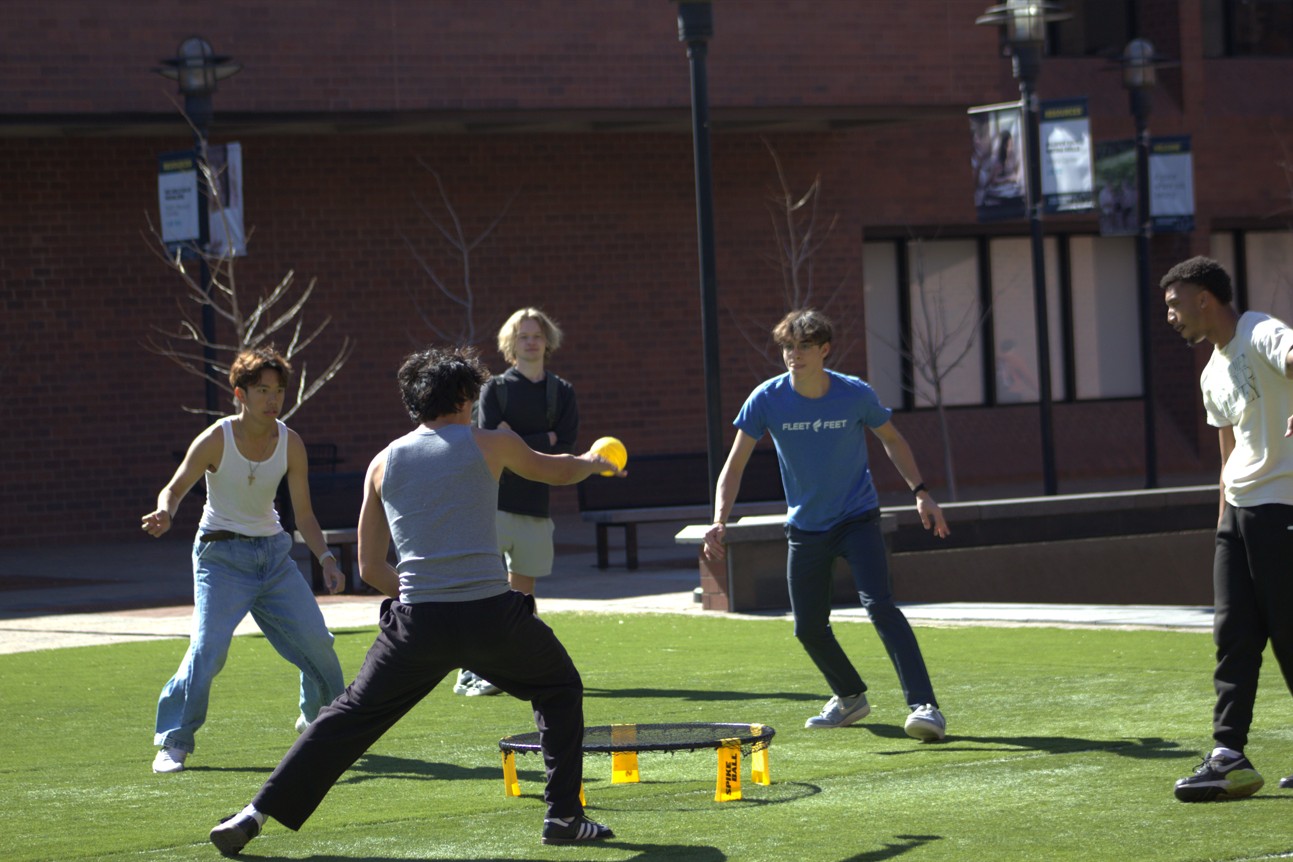
On a quiet spring afternoon at Johnson County Community College, Reagan Priest sits alone in the courtyard, listening to the light hum of passing students and chirping birds. There are no dormitories lining the campus, no football games echoing from nearby stadiums, and no tailgate parties spilling into student unions which is exactly what she needed.
Just a year ago, Reagan was preparing to return to the University of Arkansas after break, but the thought filled her with dread. She didn’t look forward to seeing classmates or walking the campus. She didn’t feel at home.
“I cried almost every single time I had to leave home to go back to school,” she said. “I’m someone that needs alone time… and I never really got that at Arkansas.”
Reagan’s story is not unique. In fact, it represents a growing shift in how many students define college success. While four-year universities often sell the full “college experience,” more students are discovering that community colleges offer something they value even more: control, comfort, and clarity.
According to the American Association of Community Colleges, nearly half of all undergraduates in the United States currently attend community colleges. As students continue to face heightened tuition, financial factors are a large concern for many students. Thus, two-year institutions like JCCC are becoming more attractive as a smart first choice for the college experience.
When Reagan transferred to JCCC, the difference was immediate. She found friendly advisors, approachable professors and, most importantly, a sense of belonging.
“Everyone I talked to like the staff, the advising people, were all just super nice and really welcoming,” she said. “I didn’t feel like just a number here.”
Inside the classroom, she found that the smaller class sizes gave her a more meaningful academic experience. No more hiding in the back of a massive lecture hall or feeling lost in the crowd.
“You’re held more accountable to show up to class and participate,” she said. “And here, it’s smaller… you really form a relationship with your professor.”
Maddie Bell, another JCCC student who previously attended a smaller university, echoed the same sentiment. She had expected community college to feel like a step down. Instead, it felt like a step forward.
“Here, I feel like I’m getting a better education,” she said. “The classes are teaching me more than my other school.”
Still, not everything was better. Maddie recalled her time at her previous university as deeply connected and social.
“I was playing volleyball there, so I was super connected with everybody,” she said. “It was a smaller school, and honestly, I knew everybody that walked the halls.”
At JCCC, things are different. Many students commute while others work full-time jobs. Making friends doesn’t happen automatically and that can feel isolating for a large portion of students.
“I don’t know very many people, and I definitely am not involved here,” Maddie said. “Definitely my other school had more opportunities for social events.”
Even Reagan, who says she feels more comfortable in her classes at JCCC than she ever did at Arkansas, misses the larger campus energy sometimes.
“I’ve talked to way more people in my classes here,” she said. “And felt way more comfortable with people here. But the campus life — it’s quieter.”
But there’s one area where both students agree JCCC offers a clear advantage, and that’s affordability.
“Arkansas was crazy more expensive… even parking was $800,” Reagan said. “Just knowing that my parents aren’t having to pay more money for me makes me feel a lot better and a lot less stressed.”
That peace of mind has helped Reagan focus on her well-being and academic goals. She now feels confident in her decision to start over and be more prepared for what comes next. She plans to transfer to the University of Kansas in the fall.
“I would definitely recommend going here for one or two years,” she said. “It’s very smart, financially and for many reasons.”
For Reagan and Maddie, community college didn’t mean giving up the college dream, but it meant redefining it.
“I became the kind of student I didn’t know I could be,” Reagan said, smiling as she looked out at the quiet campus.
And for an increasing number of students, that quiet confidence may be worth more than the noise of tradition.







Leave a Reply to Betty Doyle Cancel reply