
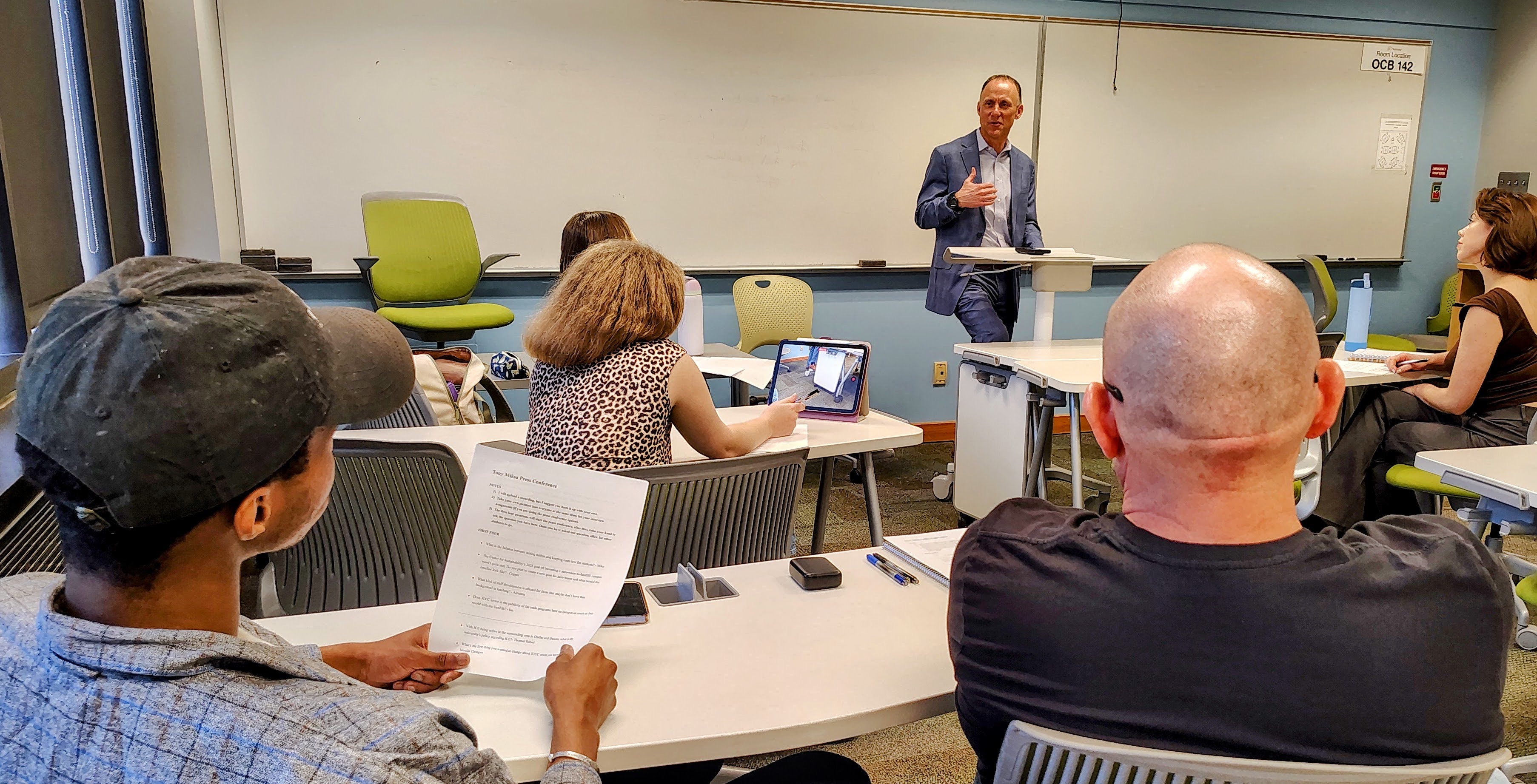
During a press conference held with students before Spring Break, JCCC President Tony Miksa discussed why JCCC will raise tuition for the upcoming FY 2026-27.
The Board of Trustees approved the increase at its meeting on December 18, 2025. Tuition rates for FY 2026-27 will increase by 4% for Johnson County students and 5% for in-state, out-of-state and Metro Rate students. New tuition rates will be $106 for Johnson County, $128 for in-state, $250 for out-of-state and $158 for the Metro Rate.
There will also be a $2 increase to the required student activity fee.
“A lot of the activities that you see on campus happen out of our student activity fee fund,” Miksa said. “That’s a fund that has dollars going specifically designated to do specific things. So that fund has been depleted because the cost of doing those activities is more; it costs more.”
Miksa reiterated that, after that increase, Johnson County still has the lowest tuition in Kansas. He spoke at a press conference hosted by the Reporting and Writing class (JOUR 122) in the Journalism and Media Communication department.
Many students, like Dallas Rooks, find the rate increase understandable because of inflation and other environmental factors.
“I don’t mind it necessarily because I feel like everything else has jumped up in price, and the school is still so [inexpensive] compared to every other school around here,” Rooks said.
The 40-40-40 Plan
During the question-and-answer session, Miksa stated that the college was developing a 40-40-40 plan. The plan’s initial aim involves a 40% graduation rate.
“The college does a great job, provides a lot of great resources for students, but I think often we let our students head off to KU, K-State, Pitt State, those wonderful four-year institutions in the state, before we let them get their associate’s degree,” Miksa said. “So we want to refocus our efforts to reach that 40% graduation rate.”
Miksa wants to recruit more students as part of the plan.
“We have about 18,600 students [who] start in the fall,” Miksa said. “We want to recruit 20,000 students on the non-credit side of the house. Recruit 20,000 students on the credit side of the house, [and that will] get us to 40,000.”
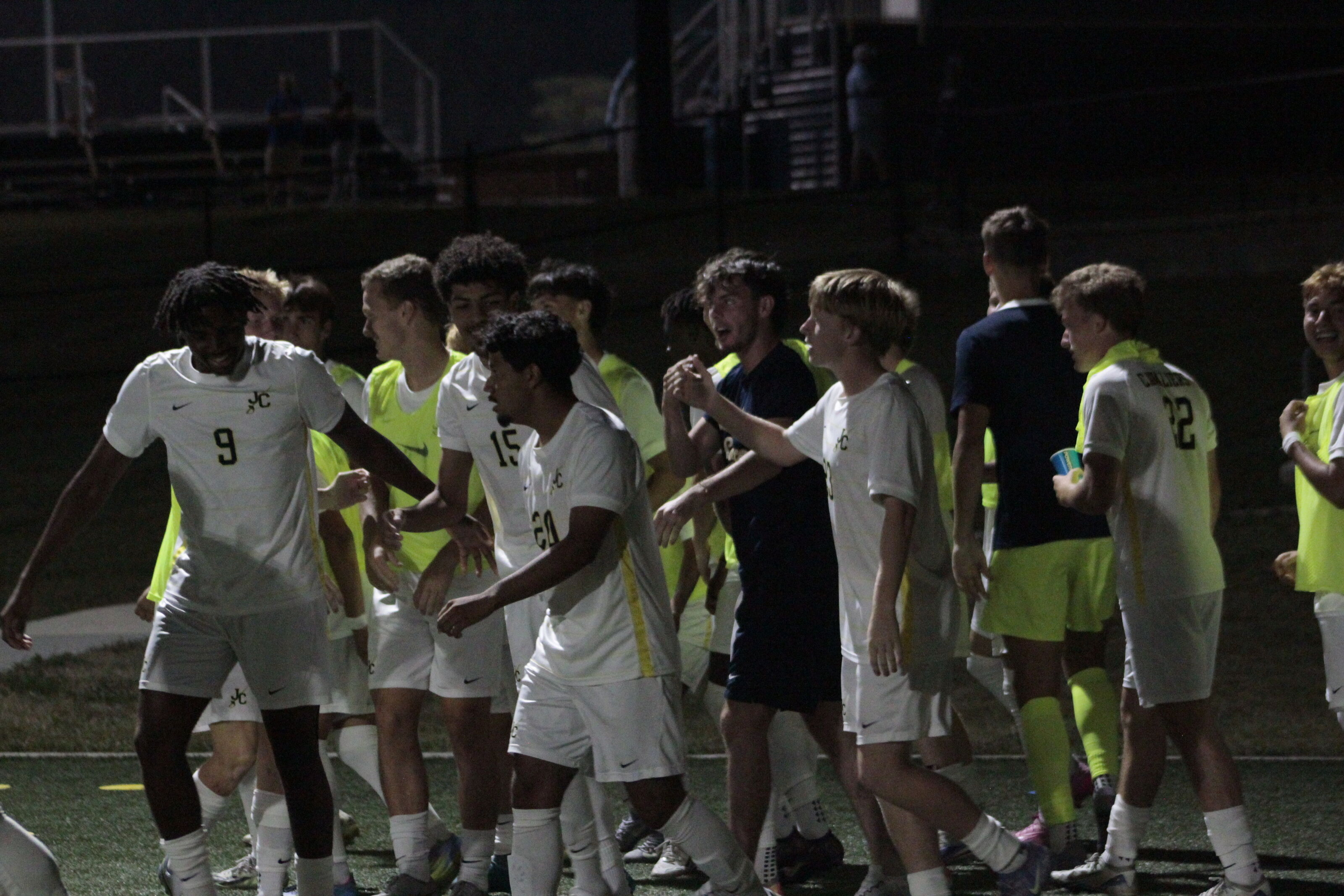
With the idea of recruiting students to reach the 40,000 goal, Miksa highlighted athletic recruitment. He suggested that spending money on the athletic department will bring in more student-athletes, who traditionally have higher GPAs. He said it is possible JCCC could see a new soccer facility built, as Miksa pointed out that soccer has nowhere to go at halftime.
In terms of general recruitment, Miksa was asked what a high school partnership would look like and what the college hopes to gain from it. He pointed to dual enrollment, when high school students take college credits.
“That is the biggest partnership that we are looking for right now,” Miksa said.
Dual enrollment provides a recruitment strategy for the college, as students who begin taking classes through JCCC are more likely to enroll after high school. Within partnerships, Miksa hoped to meet with local officials to work on curricular alignment.
The last piece of the 40-40-40 plan is to raise $40 million.
Campus Safety
When asked about active shooter drills, Miksa pointed to staff who are trained to handle those issues. Active shooter drills take place on campus, as do training sessions, but they usually only engage staff. The RAVE Guardian app is offered to students who are enrolled, and this offers them notifications for emergencies, which includes active shooter situations.
“We have a very well-trained police force, and we’ll do what we need to do to get the job done,” Miksa said.
The college has created a new facility master plan to upgrade on-campus facilities.
“The first focus on it is going to be building what we call our Health Profession Center of Excellence,” Miksa said. “We want to grow the programs we have right now, including our nursing program. And then we also want to add a few programs like radiography and stenography.”










Leave a Reply