
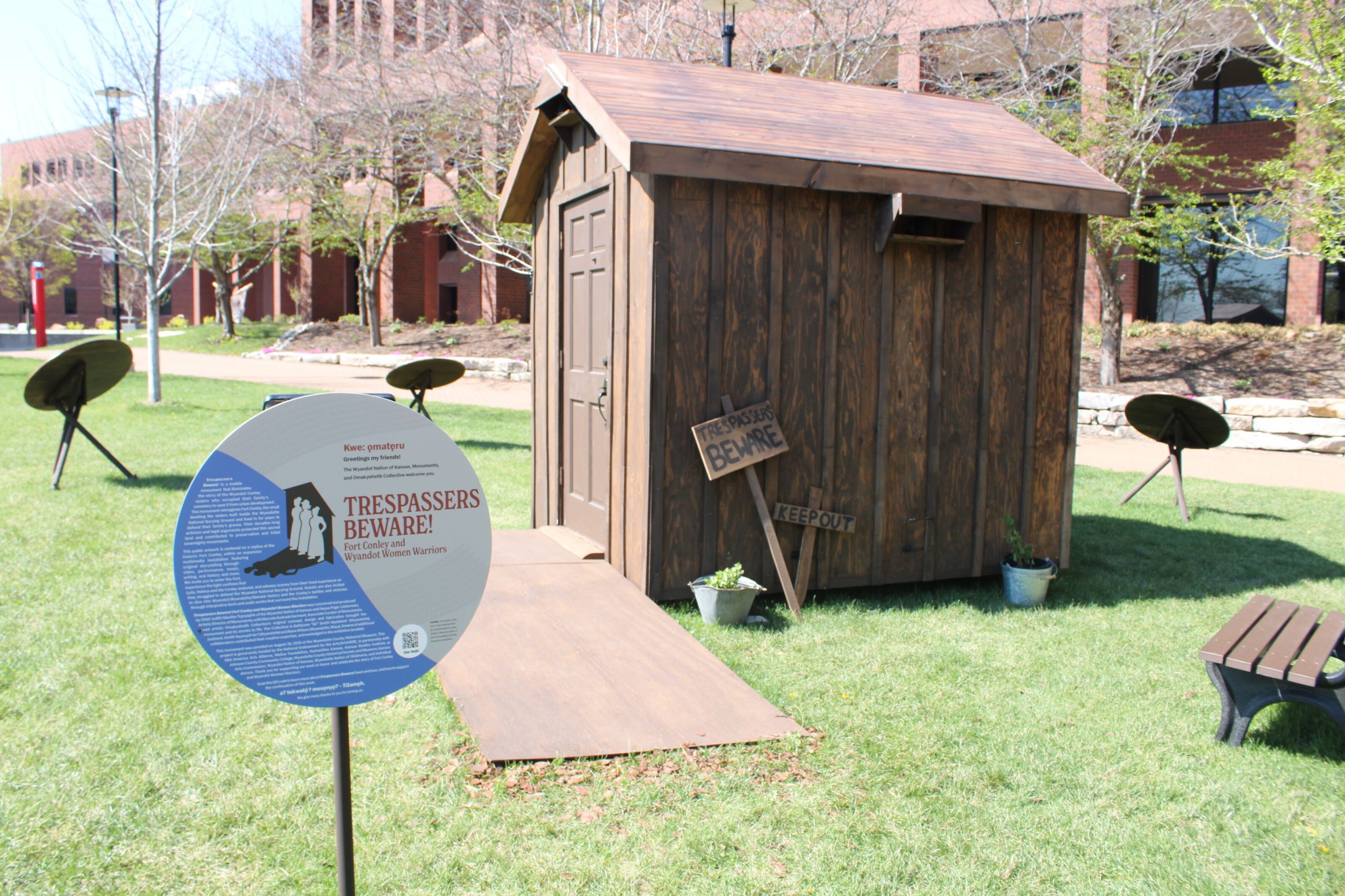
The shed at Nerman Museum during the day.
(Photo by: Khadeeja Saleem)
Did you come back from spring break and wonder what the heck that random tiny house was outside of the Nerman and the library?
Well, this building is not so random.
This installation, located on the lawn outside of the Nerman and the library, is a mobile monument called “Trespassers Beware!” The shed highlights an important piece of Kansas history.
According to Thai Edwards, Director of JCCC’s Kansas Studies Institute, this monument is a reimagining of the home of Lyda Conley, a Wyandot resident and the first indigenous woman to argue a case in front of the US Supreme Court.
“While Lyda pursued her legal case, she and her sisters, Ida and Helena, built a shack that they called “Fort Conley” in the cemetery to physically defend their mother, father, sister’s and ancestors’ burials,” Edwards said.
This installation was also created by members of the Wyandotte Nation of Oklahoma, with some members of the Wyandot Nation of Kansas contributing to the content and coordination of the project, according to Edwards.
This piece was brought to campus to help educate the community about its history and was placed in that lawn to draw attention to the installation and the museum’s art collection.
“The museum collection has a strong focus on contemporary Native [artists], including installations of works in several hallways in the Regnier Center and an installation of jewelry in the Library, and our temporary exhibition of works by Julie Buffalohead [addresses] some related themes around how history is told and stories are passed down through generations,” Learning and Academic Engagement Manager Katherine Morse said.
Ariana Balleza was one of those students who came back from break being confused by the new installation, but grew to be curious about it.
“I think the background story is very touching, and I think it is amazing how it is being displayed so more people can educate themselves on the matter. I feel it is important to understand its meaning,” Balleza said.
Edwards encourages students to actually step foot inside the exhibition whenever they are in the area.
“Indigenous actors and other performers [are] reenacting what it would have been like for the sisters to maintain a presence in the cemetery, 24 hours a day, for years. The video inside the “fort” shows the sisters in all four seasons, times when they were arrested, and even the destruction of the fort. Law enforcement tore it down numerous times,” Edwards said.
Morse hopes that students visit the exhibition and share it with people they know, drawing more traffic to the exhibit and the museum.
“I hope that students walk away wanting to learn more about this specific history, but also curious to learn more about Indigenous histories that they may not have learned about in their K-12 schooling.”
Belleza thinks the events of this story are important and that it’s amazing JCCC is taking part in sharing it.
“I believe it is important because of the fact that we are on a college campus, an educational institution, so we should seek that higher understanding of the people that came before us. It’s important to show these historical events in order to understand how we got here today, also helping us to move forward,” Balleza said.
To know more information about “Trespassers Beware! Fort Conley and Wyandot Women Warriors,” you can visit the exhibition and read the information panels around it or visit the Nerman Museum website to watch the exhibit’s trailer and read more.






Leave a Reply